
Introduction
A modern home lab is not just about running services — it is about making those services work together.
As Realm Labs expanded, more devices and systems needed a way to communicate with each other.
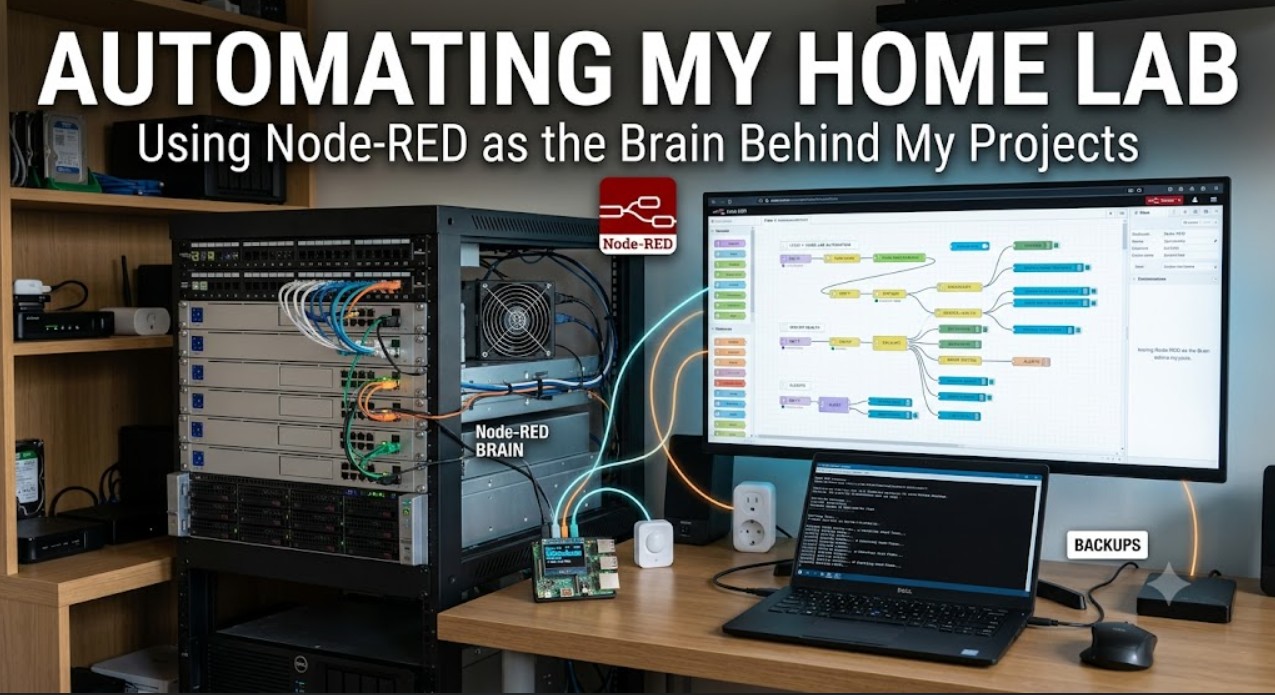
Node-RED became the automation layer that connects different technologies together, allowing hardware, software and services to interact through visual workflows.
What Is Node-RED?
Node-RED is a flow-based programming tool designed for connecting devices, APIs and services.
Instead of writing everything from scratch, workflows can be created by connecting nodes together.
This makes it ideal for:
- Automation
- IoT projects
- Smart home control
- Data processing
- System integrations
Why Use Node-RED?
Home Assistant provides excellent automation capabilities, but some projects require more advanced logic.
Node-RED provides additional flexibility for:
- Complex conditions
- Multi-step processes
- External integrations
- Custom workflows
It becomes a visual representation of how different systems communicate.
The Role of Node-RED in Realm Labs
Node-RED acts as a bridge between different parts of the environment.
Examples include:
- Home Assistant automations
- MQTT messaging
- Raspberry Pi projects
- Custom hardware
- AI integrations
Rather than each system needing to know about every other system, Node-RED manages the communication.
MQTT Communication
MQTT is a lightweight messaging protocol commonly used in automation projects.
It works using a publish and subscribe model.
For example:
A device publishes a message:
“The TARDIS lights should activate”
Another service subscribed to that message responds.
This creates a flexible communication system between different devices.
Projects Using Node-RED
Several Realm Labs projects benefit from Node-RED.
Smart Home Automation
Managing devices, schedules and events.
Model TARDIS
Controlling lighting, sounds and timed sequences.
KITT AI Assistant
Allowing AI systems to communicate with the wider home environment.
Visual Automation
One of the biggest advantages of Node-RED is being able to see the logic.
A workflow can clearly show:
Event Trigger
      |
      |
Check Condition
      |
      |
Perform Action
      |
      |
Update Device
This makes troubleshooting and improvements much easier.
Lessons Learned
Automation projects often become complicated quickly.
The biggest lesson is that good structure matters.
Keeping flows organised, naming things clearly and documenting changes makes future expansion much easier.
Future Improvements
Future plans include:
- More advanced automations
- Better integration with AI
- Additional sensors
- More hardware projects
- Expanded MQTT usage
Conclusion
Node-RED has become one of the key pieces connecting Realm Labs together.
It bridges the gap between software and hardware, allowing different systems to communicate and work together.
For a growing home lab, automation is what turns separate projects into one connected ecosystem.